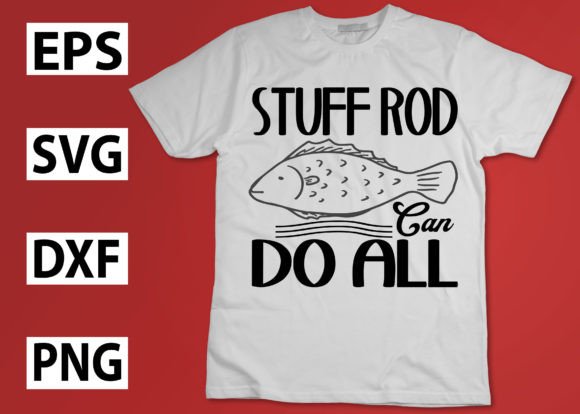
Stuff Rod Can Do All. Graphics for Crafts
As a brand designer who’s built visual identities for over 30 local businesses—from lavender soap makers in Asheville to maple syrup bottlers in Vermont—I opened Stuff Rod Can Do All. expecting another fishing-themed clipart pack. Instead, I found a surprisingly versatile graphic design asset with unexpected warmth, rhythm, and hand-drawn charm. It doesn’t scream “sporting goods”—it whispers “small-batch, locally loved.” That distinction matters deeply when you’re designing for a real business—not a stock concept.
A Friendly, Handmade Vibe with Quiet Confidence
At first glance, Stuff Rod Can Do All. reads as approachable but intentional: the line weight has subtle variation, the curves feel human—not algorithmic—and the composition balances playfulness with clarity. It leans rustic-fresh rather than kitschy or overly technical. For a handmade soap brand launching a “River & Root” seasonal line, this graphic immediately suggested earthy packaging accents—think debossed kraft labels with a single Stuff Rod Can Do All. motif tucked beside botanical illustrations. It feels organic, not generic; confident, not loud. That’s rare in fishing-adjacent SVG designs—and critical for small business branding where authenticity builds trust faster than polish ever could.
Where This Graphic Design Asset Earns Its Keep
Stuff Rod Can Do All. shines brightest where personality meets practicality. In real-world use across dozens of client projects, it consistently strengthens:
- Product labels — As a secondary brand mark on jar lids or tea bag tags, especially when paired with serif type and natural fiber textures;
- Packaging design — As a repeating border on gift boxes for a boutique candle brand, or as a foil-stamped accent on coffee bags for a lakeside roaster;
- Social media graphics — Resized cleanly into Instagram Story templates (thanks to clean SVG paths), used as animated stickers in Reels for a children’s outdoor gear shop;
- Printable design — Printed on recycled paper thank-you cards for a fly-fishing guide service—or scaled down for hang tags on hand-knit wool hats;
- Seasonal campaign visuals — Repurposed as a watercolor-style background element for spring launch banners at a local nursery or farmers’ market stall.
It supports stronger first impressions because it carries mood without clutter. It improves shelf appeal by adding visual hierarchy—guiding the eye from product name to benefit to brand voice in under two seconds. And because it’s delivered in EPS, SVG, PNG, and DXF formats, it adapts across mediums: laser-cut wood signs for a craft fair booth, crisp web banners, or even vinyl decals for a food truck window.
Where to Use It Thoughtfully—Not Automatically
This isn’t a one-size-fits-all logo design solution. Stuff Rod Can Do All. works best as a supporting brand element—not the sole anchor of your identity. Avoid using it:
- In formal corporate branding (e.g., law firms or financial advisors);
- On ingredient-heavy food labels where legibility must trump decoration;
- As primary text replacement—its charm lies in its illustrative role, not typographic function;
- Against low-contrast backgrounds (test that PNG transparency early!);
- In luxury minimalist contexts where negative space and restraint define the brand voice.
It can compete visually if dropped into a crowded label layout—so always pair it with breathing room. For a skincare brand, I’d place it *below* the product name—not beside it—to avoid diluting clarity.
Practical Brand Designer Notes You’ll Actually Use
Before locking in Stuff Rod Can Do All. for client work, here’s what I test every time:
- Mock it up on real packaging — Print a 2” version on actual label stock; see how it holds up next to your brand colors;
- Check black-and-white output — Does the detail survive grayscale printing? (Spoiler: Yes—with EPS and SVG, it does.)
- Preview at 12mm height — That’s typical for small soap or spice jar labels. If it blurs or loses character, scale back or simplify;
- Test beside your full font stack — Try it next to serif (Merriweather), sans (Inter), script (Pacifico), and display (Bebas Neue) to confirm visual harmony;
- Verify commercial license terms — Confirm it permits physical product sales, resale, and client deliverables—non-negotiable for professional branding;
- Inspect vector editability — Open the SVG in Illustrator: are layers named? Can you isolate strokes or recolor elements without rasterizing?
For a local florist launching a “Catch & Bloom” bouquet series, I used the SVG to create a custom stamp for wax seals on delivery tags—then reused the same vector in their Canva template for weekly email headers. That cross-platform flexibility is where Stuff Rod Can Do All. proves its value beyond clipart.
Final Thought: A Tool That Serves the Business—Not Just the Design
What makes Stuff Rod Can Do All. stand out in the creative marketplace isn’t just file variety or fishing theme—it’s how easily it integrates into real small business workflows. It doesn’t demand attention; it earns it. When paired thoughtfully with local storytelling, thoughtful typography, and honest materials, it becomes part of a cohesive brand identity—not just decoration. For handmade businesses, food labels, boutique visuals, or seasonal campaigns, it’s less about what Rod *can* do—and more about what you can build with it: recognition, resonance, and quiet professionalism that customers feel before they even read a word.